Hardness
Tips are sold in grades from soft to hard, sometimes with extra steps such as medium-soft or extra-hard. Labels are not standardised between makers, so one maker's medium may feel like another's medium-hard.
| Grade | Feel | Spin and grip | Durability |
|---|---|---|---|
| Soft | Muted, cushioned | Grips well; forgiving | Compresses and mushrooms faster; needs shaping often |
| Medium | Balanced | Good grip with fewer adjustments | Holds shape reasonably well |
| Hard | Crisp, loud | Grips well when chalked and shaped; less forgiving | Keeps shape longest; may glaze |
| Phenolic or very hard | Very crisp | Little grip; not for spin shots | Near indefinite; used on break and jump cues |
Most players do well with a medium tip on their playing cue. Move softer if you want more feel, harder if you are tired of reshaping.
Layered versus single-piece
| Type | How it is made | Strengths | Weaknesses |
|---|---|---|---|
| Single-piece | One pressed piece of leather | Inexpensive; easy to fit | Can vary from tip to tip; may mushroom |
| Layered (laminated) | Several thin leather layers glued together | Consistent; holds shape well | Higher cost; a layer can delaminate if damaged |
Layered tips are common on playing cues because each tip of a given grade tends to play alike. Single-piece tips can play very well; they just vary more from one to the next.
Tip shape
A tip should be domed, not flat. Common profiles are described as roughly the curve of a nickel or a dime: a nickel curve is flatter, a dime curve rounder. A rounder tip contacts the ball nearer where you aim when applying spin. A flat tip miscues. Shape the tip with a dedicated tip shaper, not by grinding it on the floor or a wall.
When to replace a tip
- It has worn so thin that the ferrule is close to the contact area.
- It no longer holds chalk even after scuffing.
- Layers are separating or the glue line has lifted.
- It has mushroomed over the ferrule and trimming no longer fixes it.
Replacement is quick work for a cue repairer, and many players learn to do it themselves with a tip clamp and suitable glue. Match the new tip's diameter to your ferrule.
Chalk
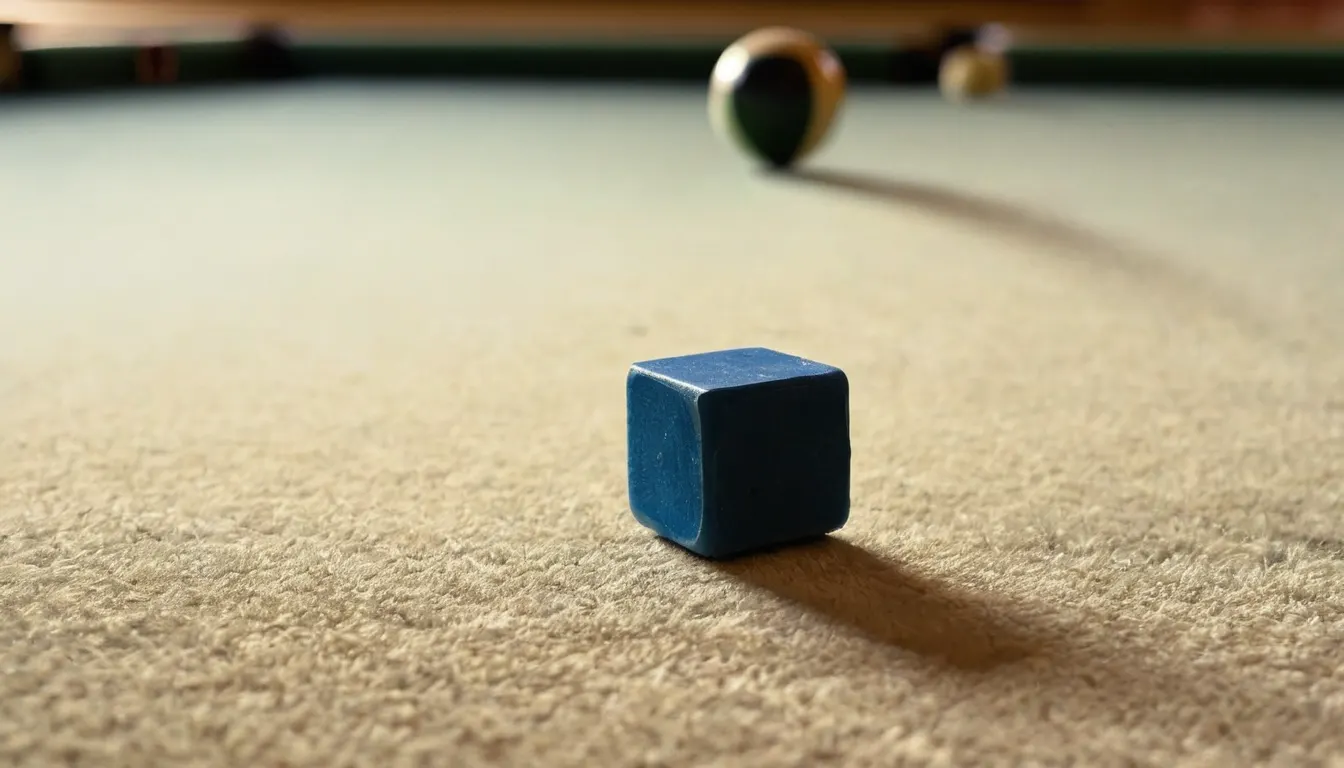
Chalk adds friction between tip and ball. Chalk lightly before most shots, brushing the chalk across the tip rather than grinding the tip into the cube, which wears a hole in the cube and coats the ferrule. More on this in cue care.