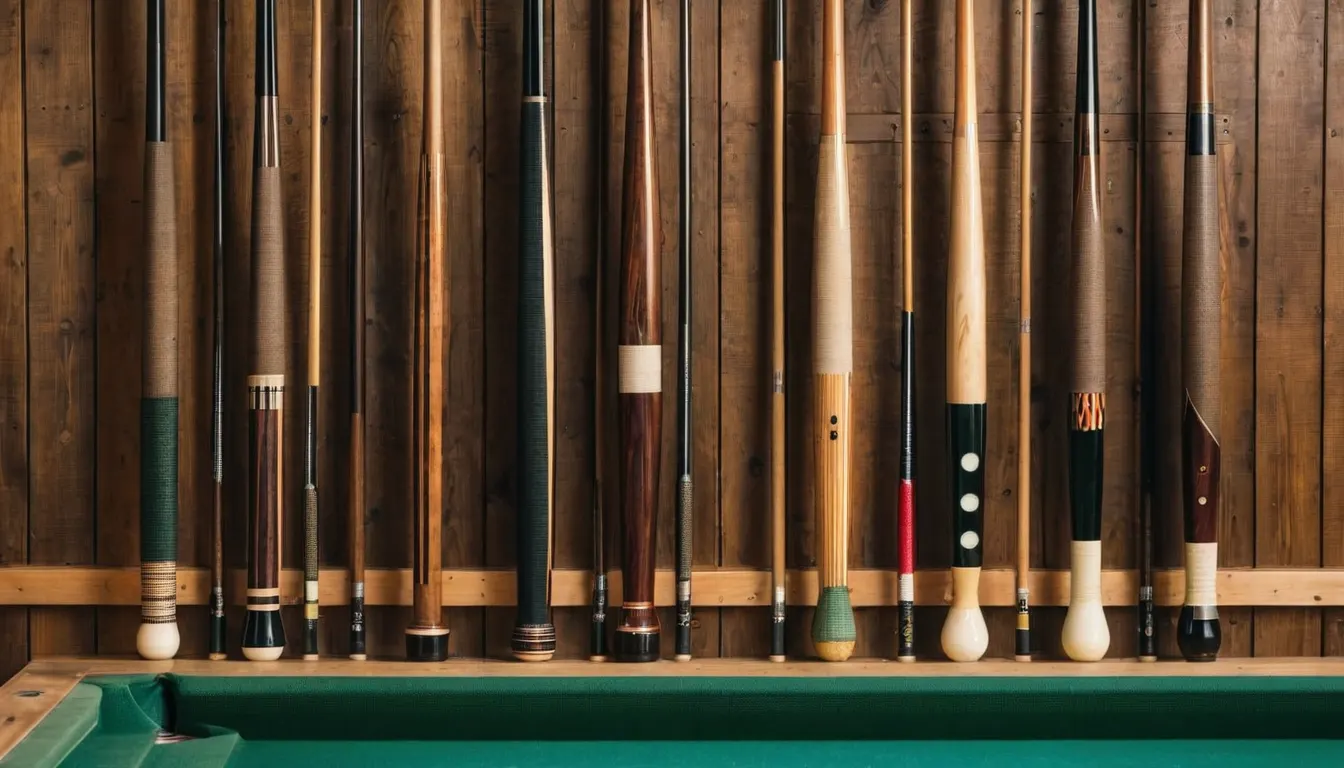
Why buy a cue at all
House cues are shared, often warped, and fitted with tips that nobody maintains. Every time you pick a different one, the weight, length and tip change. A cue of your own removes that variable, so the results you see come from your stroke rather than the stick.
That benefit comes from consistency, not expense. A modest, straight cue with a well-shaped tip gives you almost all of it.
Five steps to a first cue
- Start with standard dimensions. A two-piece cue around 58 in long and 19 oz suits most adults. Adjust only if you are noticeably shorter or taller, or if a heavier or lighter house cue has always felt better. See weight and length.
- Pick a tip diameter around 12.5 to 13 mm. That is the traditional range for pool and the most forgiving for a beginner. Thinner shafts come later, if at all. See taper and tip size.
- Choose a medium tip. Medium tips balance grip on the ball with durability. Very soft tips need more shaping; very hard tips punish a slightly off-centre hit.
- Check straightness in person, or ask the seller how they check it. This is the one thing you can't fix cheaply later.
- Decide on a wrap by how your hand feels. Linen absorbs sweat; leather feels softer; a wrapless butt feels smooth and clean. None is "better".
What to check in the shop
| Straightness | Sight down the assembled cue and the shaft alone while turning it slowly. Any wobble in the line is a bend. |
|---|---|
| Joint | Screws together smoothly and seats flat with no visible gap or rattle. |
| Tip | Firmly glued, flush with the ferrule edge, shaped to a dome rather than flat. |
| Ferrule | No cracks or lifting at the seam with the shaft. |
| Finish | Shaft smooth to the touch, not sticky or heavily lacquered where your bridge hand slides. |
| Weight label | Stated weight matches what you expected; many cues carry it on the butt or the box. |
Rolling a cue on a table is a popular check, but tables are rarely perfectly flat and a tapered shaft wobbles naturally as it rolls. Sighting down the cue is more reliable.
What you can ignore for now
- Exotic woods and inlays. Cosmetic. They raise the price, not your average.
- Specialist shafts. Low-deflection and carbon shafts can help, but they are easier to judge once you know how a standard shaft plays. Read the comparison when you're ready.
- Break and jump cues. Useful later. One playing cue is enough to begin. See break and jump cues.
- Custom work. A cue maker can build to your exact preferences, but you need to know what those preferences are first.
Common first-cue mistakes
- Buying the heaviest cue on the rack because it "feels powerful". Heavier cues are slower to accelerate and can tire your arm over a long session.
- Choosing a cue for its looks and accepting a poor tip. Budget for a new tip if the fitted one is low quality.
- Skipping a case. A cue left loose in a car or leaning in a corner can warp within weeks. See cases.
Not sure about money? The budget guide explains what each tier usually adds, so you can stop where the returns flatten out.